I recently finished The Bookseller of Florence by Ross King. A fascinating book, it relays major historical events of Italy in the fifteenth century, describes the process of creating manuscripts in the pre- and immediately post-printing world, and details the process of how Greek and Latin classics began to be rediscovered and proliferated by Humanist scholars. It's gotten me thinking about the fine details of bookmaking in the pre-standardized world of individual scribes and illuminators. Presented here is a list of works from the Western Canon as spellbooks, The Odyssey broken up into 9 parts as well as 11 other works, as well as rules for a hypothetical game based on wizards-scribes hunting down ancient manuscripts and learning dead languages to sidestep the corrupted translations of previous censorious or undiligent copyists. That being said, there's no reason you couldn't use a similar format for learning spells from, say, the Confucian Canon, or by reading your favorite poems, or by watching Anime.
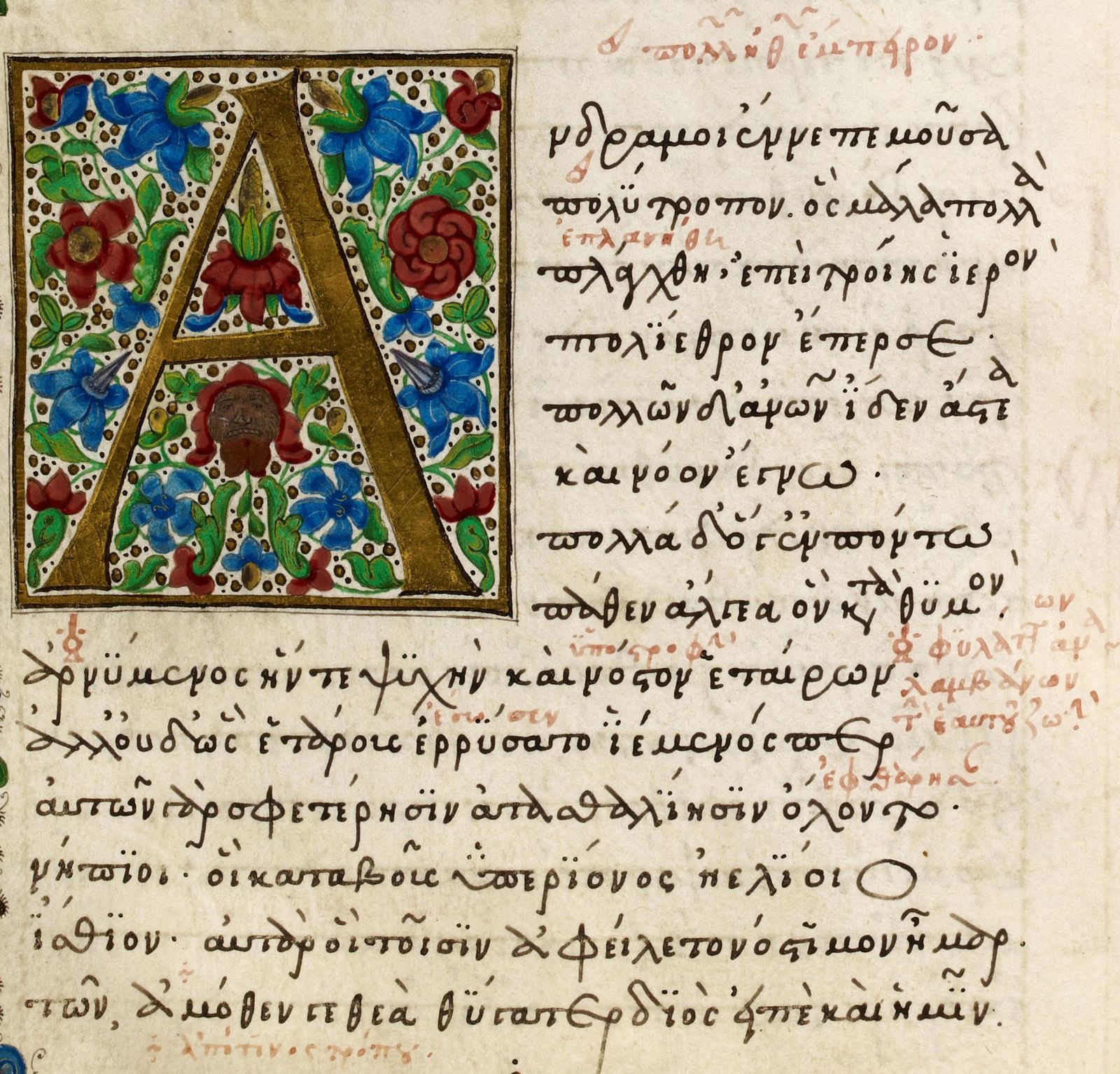
20 Spellbooks of the Western Canon
Underlined entries are spells learned on studying the work. Italics are fantastic abilities gained. Studying a work grants all the benefits at that quality as well as all benefits of lesser qualities.
The Odyssey is a work by the Greek Homer, detailing the turbulent return of Odysseus to his native land of Ithaca. To have it entire, instead of in fragments, is the dream of many a sorcerer. Here are several common fragments, arranged in an order familiar to us.
The Dispatch of Pallas. There is grumbling among the Gods of the poor treatment Odysseus has received. Athena is sent to aid his son Telemachus and events are set in motion for the eventual return of the King of Ithaca.
Exemplary: Iron Heart Surge (ignore fetters or impediments)
Great: Clear Mind (give an additional save against an ongoing effect)
Mouldering: gives information on a land beyond the African desert, “Ethiopia”
The Plight of Telemachus. A three book set detailing how Telemachus and Penelope are pressed hard by a flock of outrageous suitors. Details how Telemachus, at the advice of Athena, visits his father’s war buddies and begins to search for him.
Exemplary: Recognize deities disguised as mortals.
Good: details what sacrifices should be made to the Gods for a safe journey by sea.
Poor: Bestow Token (those who accept valuable gifts from you cannot betray your hospitality).
The Return to Humanity. A four book set. Released from the captivity of Calypso, Odysseus makes his way back to civilization, entreating with a kingdom of gifted sailors for aid.
Exemplary: If skilled in smithing, you are able to make web thin metal fibers as strong as steel chains.
Great: Invisibility
Decent: Imperial Garb (be treated as though you wore impressive finery, even if you don’t have a stitch on)
Mouldering: Scarf of Ino (become immune to drowning)
The Shepherd’s Outrage. A book detailing Odysseus’ raid on Ismarus, the island of the Lotus-Eaters, and the harrowing account of Polyphemus capturing the man of strife.
Exemplary: Entrancing Morsel (As Dominate Person, but must be consumed).
Great: Man to Sheep
Decent: Reveals the weakness of Cyclopes. Their eyes are protected by an impenetrable membrane, but a sturdy blow to the back of the head will cause the eye to pop out.
Mouldering: Make Potable Potent
The Book of Circe. A two book set, highly sought. Details the magical aid granted by Aeolus, the predation of the Laestrygonians, and the encounter with Circe. With some help from Hermes, Odysseus defeats the sorceress who advises him to voyage to the Underworld. He does so, learns many terrible things, returns for more advice from Circe, then departs.
Exemplary: Baleful Polymorph, Protection From Magic
Great: Sleep, Speak With Dead
Decent: Call Wind
Mouldering: Sense Hostile Intent
The Vengeance of Helios. A single volume in which Odysseus contends with the sirens, passes by Scylla, and lands on the island of Thrinacia. His treasonous men eat the sacred cattle of Helios, leading to their deaths and the shipwrecking of Odysseus in Calypso’s isle.
Exemplary: Sprout Appendage, Terror
Great: Enrage/Becalm Waters
Decent: Deafness
Return to Ithaca. A four book set. Odysseus is returned to Ithaca. Hiding amongst the most loyal of his slaves, Athena reunites him with Telemachus. Together they plot the downfall of the suitors.
Exemplary: Petrify
Decent: Glibness
Mouldering: Wretched Garb (be treated as though you appear as a contemptible, pitiful wretch, even if you wear kingly attire)
Odysseus the Beggar. A four book set in which Odysseus sizes up the ingrates who plunder his household, plot against his son, and attempt to seduce his wife. Signs abound of the divine retribution coming for the suitors.
Exemplary: Become literate in Scars
Great: Hideous Laughter
Decent: Vigilance of Argus (suffer no ill effects from refraining from rest)
Mouldering: Become proficient in thrown improvised weapons
Zeus, Avenger of Outrages. Another four book set. Penelope proposes a contest, with the winner taking her hand in marriage. None of the suitors can manage it, at which point Odysseus wins the challenge and reveals himself. Springing a cunning trap, all the suitors are slain, along with slaves of the household held to have been disloyal. Athena directly intervenes to prevent a cycle of violence by the aggrieved families of the suitors.
Exemplar: Iron Hail (Within a duration, whenever you slay a foe with a bow, you may take another shot)
Great: +1 damage when using a bow and arrow
Mouldering: Compulsive Deceit (Target must lie for the duration of the spell)
The Alexandrian Commentary. A unique work, written in Ancient Greek on a papyrus scroll, now badly worn. It mostly consists of excerpts from the Iliad describing the combats of Hector and the rage of Achilles. Brilliant commentary is written in the margins.
Obsession of Makedon. By obsessing over the task at hand and consulting the Alexandrian Commentary, the sorcerer may use an army to quickly and successfully assault a defended city at the instant cost of 1d6 years of their natural lifespan.
On Oratory. Latin, written by Cicero, this work is a treatise in how to give a persuasive speech.
Exemplary: Dominate Person
Great: +4 Wisdom
Decent: Incite/Calm Mob
Mouldering: serves as a basic legal education.
On Architecture. A ten part Latin series by Vitruvius, a practical guide to city planning and building.
Exemplary: Speak With Columns, Fountains, and Engraving
Great: construct siege engines and other contraptions in half the time
Decent: When you personally oversee a building project, -25% cost.
On the Nature of Things. A three part effort by Lucretius to convert scientific and ethical understanding into Latin verse.
Exemplary: Become immune to fear. Move beyond anxiety.
Great: Remove Free Will (target must test morale to act contrary to shouted instructions)
Decent: Strengthen eye beams. Vision occurs through atomic particles fired from the eyes, which then bounce back. You have learned to control the strength of these beams. At maximum intensity, they deal 1d6 damage against anything you focus on.
Mouldering: Pierce Atomic Void (Matter is mostly empty space. Move through “solid” objects)
The Almagest. A 13 part series written by Ptolemy in Latin, though manuscripts have been translated into Arabic and Greek.
Exemplary: gain a perfect sense of time
Great: Eclipse (Light sources within 60 ft no longer give off light).
Decent: Retrograde Motion (Target saves or retraces their steps)
Mouldering: Geocentrism (A piece of earth touched by the sorcerer becomes immovable)
On the Usefulness of the Parts of the Body. A 17 part Latin series by Galen. It details his theory that every organ is perfectly designed for a certain function. Evidence is based on vivisection and empirical observation.
Exemplary: Exorcise Disease
Great: Cure Wounds
Decent: by prodding at your pressure points, you may render your limbs insensate for an hour.
Timaeus. Plato’s work describing one “likely” possibility for how the world was created. It details a benevolent creator “the Demiurge” building space out of the four classical elements. It also includes an Atlantis tale.
Exemplary: Ideal Form (restore a damaged creation)
Great: Wall of Fire, Wall of Water, Wall of Air, Wall of Earth
Decent: Untether Soul (Leave your body behind. Float around. Possess empty vessels)
The Republic. Plato’s work describing the nature of justice through a utopian society. Theorizes the soul is made up of Reason, Spirit, and Desires.
Exemplary: Kallipolis (Targets must save or be effected. Fighter-types may only move and attack, Wizard-types may only cast spells and talk, Rogue-types may only move, hide, lie, and steal. Cleric-types are immune)
Great: Allegory of the Cave (Target becomes a shadowy, indistinct figure out of phase with their surroundings. 50% miss chance for attacks from or to the target. Physical disguises are seen through unerringly in this state)
Decent: Enflame Appetite. You may eat a slot of rations to heal one 1 hp.
The Geography. An eight part text by Ptolemy inventing the latitude/longitude coordinate system and describing the location of ancient sites.
Exemplary: Gain a perfect spatial awareness.
Great: Learn the location of the True Tomb of Alexander.
Decent: in coded language, a treasure map!
Mouldering: Roiling Earth (Shake a plot of ground, making it difficult to cross)
The Annals. A sixteen part history by Tacitus detailing the Julio-Claudian dynasty.
Exemplary: Gain immunity to charm and compulsion.
Great: Treasonable Remarks (alerts you when your servants betray you in word)
Decent: Scapegoat (deflect a harmful effect towards the target of your choice)
Mouldering: Beneficence (as mage armor)
The Apology. A work by Plato detailing the defiant testimony by his title, Socrates, during his trial for corrupting the youth of Athens.
Exemplary: Faultless Soul, unless you attack first, foes take 1 point of Wisdom damage whenever they attack you.
Great: You learn how to satirize the mighty. Those who have been victimized by the great will give you free room and board.
Mouldering: The Gadfly That Wakes the Horse (as Charm Person. After the spell ends, they hate your guts
Scribe, Sorcerer, Sovereign
Sorcerers gain Magic Dice based on the value of their library, 1 die at 100 florins, 2 at 400, 3 at 800, etc.
Works have a “Manuscript Degeneracy”, or “MD”. When copying a work, roll 1-4 MD based on the quality of the scribe (better scribes roll fewer dice), +1 if translating,+1 if they are not fluent in the language in which the text is written. Taking twice as long to be careful gives -1 MD.
For each 4-6 rolled, the text gains a Corruption, added to any Corruptions from the text it is copied from.
A work with 0 Corruptions is Exemplary, 1-5 Great, 6-10 Decent, 11-20 Poor, 21+ Mouldering.
Two copies of the same work can be “reconciled”, compared to remove Corruptions from the text. Obviously, this is impossible if one copy is descended from the other. Roll a number of d6s equal to the summed Corruptions. For each triple rolled, remove a Corruption from each by writing corrections in the margins or by keeping a journal of errata.
Script
Ancient Script - Only found in texts that have miraculously survived a millennium or more. +25% manuscript value, takes twice as long to study the work as once well known shorthand must be deciphered and classic references crossreferenced.
Carolingian Letters - Most ecclesiastical documents are written in this script, developed during the short Golden Age of Charlemagne’s reign. Beloved for its legibility. ”Clerical” holy texts are named for the Greek word for allotment, referencing how scribes were given a special allotment of ink and told to use it to preserve the most essential texts.
Modern Script - Also called “Gothic” text. Tall, towering letters which look all too alike. Considered to be a delightful way to ornament a work. +25% manuscript value, +1 MD when copying.
Humanist Script - Also called “Modern Antique” letters. A script intentionally developed by scholars for legibility. -1 MD when copying.


No comments:
Post a Comment